
European hedgehog
Erinaceus europaeus
Described in 1758 by Carl Linnaeus. It is one of the most studied hedgehog species and the only one widespread across western Europe. It is unique for its ability to thrive in both natural habitats and highly urbanised areas.
- NE
- DD
- LC
- NTCurrent status: Near Threatened
- VU
- EN
- CR
- RE
- EW
- EX
Current status: Near Threatened
What does this mean?
This species may become threatened in the near future.
Categories follow the IUCN Red List.- Kingdom
- Animalia
- Phylum
- Chordata
- Class
- Mammalia
- Order
- Eulipotyphla
- Family
- Erinaceidae
- Subfamily
- Erinaceinae
- Genus
- Erinaceus
- Species
- Erinaceus europaeus
- Species group
- Hedgehogs
Get to know this species
Biology & ecology
Habitat
This species is highly adaptable and found in a variety of habitats, including deciduous and mixed woodlands, grasslands, parks, hedgerows, rural gardens, and urban areas. It prefers habitats with dense ground cover for nesting and protection but also needs access to open spaces for foraging. Its ability to thrive in both rural and suburban environments has made it a familiar presence to many Europeans, although habitat fragmentation and modern land use practices have increasingly affected its natural range.
Physical traits
The European Hedgehog is one of the largest species in the Erinaceidae family. Adults typically weigh between 800 and 1200 grams, although pre-hibernation individuals may exceed 1500 grams. Body leng…
Read full text
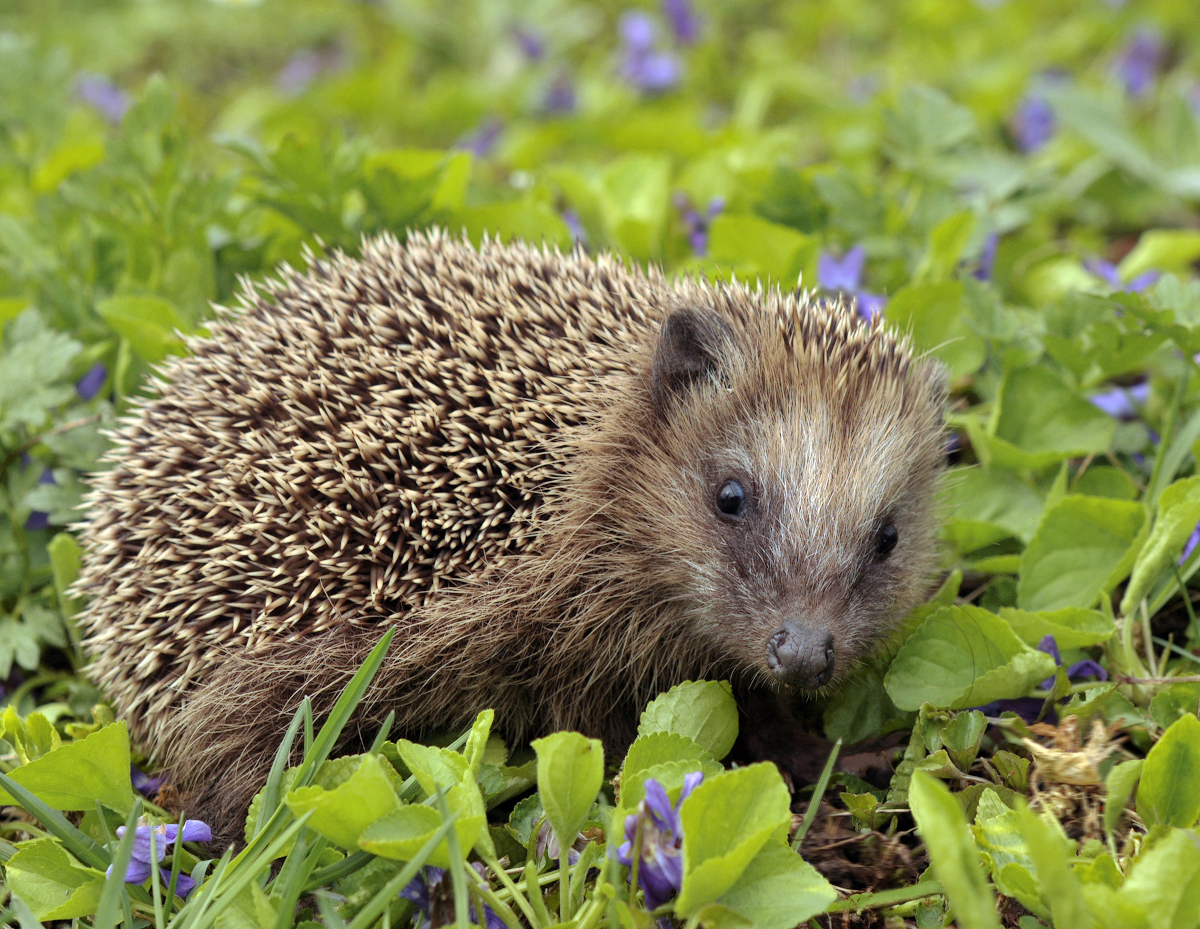
The European Hedgehog is one of the largest species in the Erinaceidae family. Adults typically weigh between 800 and 1200 grams, although pre-hibernation individuals may exceed 1500 grams. Body length ranges from 20 to 30 centimeters. It has a distinctive coat of sharp brown and white-brown spines covering its back and sides, while its face and underparts are covered in coarse brownish-grey fur. The limbs are short and sturdy, adapted for digging and crawling through undergrowth. The ears are relatively small and rounded, and the snout is long and mobile, highly suited to rooting through leaves and soil in search of food. Seasonal weight gain is crucial for hibernation, with fat stores building under the skin and around internal organs.
Behavior
The European Hedgehog is strictly nocturnal and predominantly solitary, with individuals occupying loosely defined home ranges that may overlap. It is active during the warmer months, from spring to …
Read full text
The European Hedgehog is strictly nocturnal and predominantly solitary, with individuals occupying loosely defined home ranges that may overlap. It is active during the warmer months, from spring to autumn, and undergoes true hibernation in winter, often from November to March, depending on the climate. Before hibernation, it constructs a well-insulated nest called a hibernaculum, using leaves, grass, and other materials. During its active season, the hedgehog spends its nights foraging, often traveling up to 4 kilometers per night. It uses a network of pathways through vegetation and may return to the same shelters or feeding spots repeatedly. The species is known for its characteristic defensive posture, rolling into a tight ball when threatened, which protects its vulnerable parts with a bristling shell of spines.
Diet
As an omnivorous insectivore, the European Hedgehog has a diverse diet. It primarily consumes invertebrates such as beetles, caterpillars, earthworms, slugs, and snails. It also eats spiders, millipe…
Read full text
As an omnivorous insectivore, the European Hedgehog has a diverse diet. It primarily consumes invertebrates such as beetles, caterpillars, earthworms, slugs, and snails. It also eats spiders, millipedes, and ants, and may opportunistically feed on fallen fruit, carrion, bird eggs, or even small vertebrates such as frogs or nestlings. Its foraging strategy relies on its acute sense of smell and hearing rather than sight. Seasonal availability of food significantly influences feeding behavior. Earthworms, a major dietary component, may become scarce during drought, causing hedgehogs to seek alternative prey. The species is a generalist feeder, which contributes to its adaptability in diverse environments.
Reproduction
Breeding in the European Hedgehog occurs from April to September, with a peak in May and June. After a brief courtship that may involve circling, vocalizations, and scent-based cues, mating takes pla…
Read full text
Breeding in the European Hedgehog occurs from April to September, with a peak in May and June. After a brief courtship that may involve circling, vocalizations, and scent-based cues, mating takes place without pair bonding. Gestation lasts about 34 to 38 days. The female gives birth in a concealed nest, often under a shed, bush, or pile of leaves. Litters typically contain 4 to 5 young, although up to 7 may occur. The hoglets are born blind and spineless, with soft white spines emerging within hours. Eyes open at about two weeks, and weaning occurs around four to six weeks. In some cases, females may produce a second litter later in the season, though late-born young may struggle to reach sufficient weight for hibernation. Sexual maturity is reached by 10 to 12 months, and in the wild, the average lifespan is about 2 to 4 years, with some individuals living up to 6 or more under favorable conditions.
Communication
The European Hedgehog relies primarily on olfactory and tactile communication. Scent plays a central role in identifying territories, recognizing individuals, and signaling reproductive readiness. He…
Read full text
The European Hedgehog relies primarily on olfactory and tactile communication. Scent plays a central role in identifying territories, recognizing individuals, and signaling reproductive readiness. Hedgehogs often mark areas or objects with urine or feces. Although generally silent, they can produce a range of sounds, including snuffles, huffs, snorts, and occasional squeals, especially during courtship or when distressed. Juveniles may emit high-pitched chirping noises when calling for their mother. Self-anointing behavior has also been widely observed in this species, often after encountering strong-smelling substances. The function of this behavior is not fully understood but may relate to camouflage, scent marking, or toxin absorption.
Threats
Habitat fragmentation, road mortality, intensive agriculture, use of pesticides, and loss of insect prey are major threats. Garden fencing, impermeable landscaping, and the widespread use of robotic lawnmowers and slug pellets further reduce habitat suitability. Climate change may also affect hibernation cycles, leading to mismatches between food availability and energy needs. Conservation measures include the creation of hedgehog-friendly gardens, wildlife corridors, road crossings, and public education campaigns. In some countries, the species receives legal protection, but more coordinated research and habitat connectivity are needed to reverse its decline.
This species as pets
The European Hedgehog is not commonly kept as a pet due to legal protections and its specialized needs. In many countries, it is illegal to keep wild individuals without a license. However, it is fre…
Read full text
The European Hedgehog is not commonly kept as a pet due to legal protections and its specialized needs. In many countries, it is illegal to keep wild individuals without a license. However, it is frequently rehabilitated in wildlife centers across Europe, especially during autumn when underweight juveniles are brought in. In captivity, the species requires ample space, naturalistic substrates, and seasonal adjustments to light and temperature to support hibernation. It is susceptible to stress when confined or handled excessively, and inappropriate diets often lead to obesity or malnutrition. Common health issues include internal and external parasites, lungworm, mange, injuries from garden tools, and dental problems. Hibernation in captivity requires careful temperature control and should never be induced in sick or underweight individuals. Educational facilities and sanctuaries sometimes house non-releasable hedgehogs for outreach purposes. Successful care depends on understanding the animal’s wild biology and providing enrichment that supports its natural behaviors.
Where does it live?
The European Hedgehog is native to a wide area of Europe, ranging from the Iberian Peninsula in the west to western Russia in the east, and from southern Scandinavia to the northern Mediterranean. It has also been introduced to New Zealand, Australia and a few other islands, such as the British Isles, where it is now widespread and considered an invasive species.
Linked Knowledge Hub articles
Hedgehog houses, leaf piles and log piles for hedgehogs in Europe
Wild hedgehogs in Europe need dry, safe places to sleep, raise young and hibernate. Learn how to choose, build and place a good hedgehog house, and how simple leaf piles and log piles give hedgehogs free shelter, nesting material and food.
Read articleA hedgehog's year in Europe: how to help in every season
From hibernation to hoglets and autumn juveniles: what the four hedgehog species in Europe do in each season, what they need from you, and how to tell when a small hedgehog in autumn needs help.
Read articleLinked research
No linked public research records yet.
Sources
Referenced sources
- Gazzard, A. & Rasmussen, S.L. 2024. Erinaceus europaeus. The IUCN Red List of Threatened Species 2024: e.T29650A213411773. https://dx.doi.org/10.2305/IUCN.UK.2024-2.RLTS.T29650A213411773.en. Accessed on 15 October 2026. Open source