
Mole-like rice tenrec
Oryzorictes hova
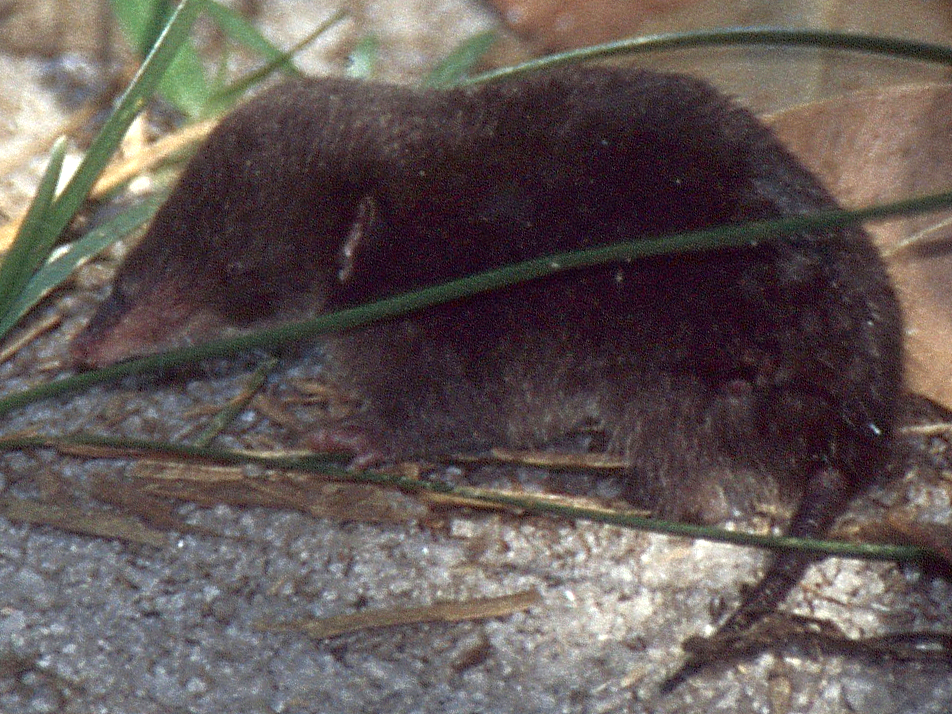
First described in 1870 by Grandidier, the Mole‑like Rice Tenrec is unique among its relatives as the only tenrec adapted for a semi‑fossorial lifestyle, often found in rice fields where it digs burrows with powerful forefeet.
- NE
- DD
- LCCurrent status: Least Concern
- NT
- VU
- EN
- CR
- RE
- EW
- EX
Current status: Least Concern
What does this mean?
The assessment found a lower risk of extinction.
Categories follow the IUCN Red List.- Kingdom
- Animalia
- Phylum
- Chordata
- Class
- Mammalia
- Order
- Afrosoricida
- Suborder
- Tenrecomorpha
- Family
- Tenrecidae
- Subfamily
- Oryzorictinae
- Genus
- Oryzorictes
- Species
- Oryzorictes hova
- Species group
- Tenrec
Get to know this species
Biology & ecology
Habitat
The species inhabits a wide range of moist habitats including lowland rainforests, montane forests, marshes, swamps, seasonally flooded areas, and even rice paddies. It occurs from sea level up to around 1,990 m elevation. While primarily forest‑dwelling, its ability to persist in agricultural or anthropogenic wetlands reflects ecological flexibility.
Physical traits
The mole-like rice tenrec has a compact, muscular body measuring 99–124 mm in length and weighing approximately 28–40 g. Its sturdy limbs end in broad, powerful claws adapted for digging; its small eyes and ears provide a limited sensitivity to light. The tail is short (38–62 mm) and non-prehensile. The fur is soft, typically brown to light brown on the upper side, with a lighter underside.
Behavior
This tenrec spends much of its time underground or under dense leaf litter, excavating burrows along stream banks or in rice field embankments. It is mostly active at night, foraging below surface soil or at the surface in moist environments. Although it sometimes forages above ground, it avoids open areas and stays hidden. Territorial behaviour has been observed, and it may navigate underground labyrinths via scent and tactile cues.
Diet
Gut-content and isotopic analyses show a diet rich in aquatic and soil invertebrates, especially worms, grasshoppers, insects, and some plant material. Prey is captured underground or within leaf litter using digging behaviour. One observation noted vegetable matter, implying occasional omnivory.
Reproduction
Little is known about its reproduction, but captured pregnant females have carried three to four embryos, suggesting small litter sizes. Gestation likely lasts around two months, based on related tenrec species. Development and timing in the wild remain unknown.
Communication
There are no detailed studies on its communication. It is likely to use scent marking and tactile interactions, particularly maternal and territorial cues, similar to its relatives. No vocalisations or ultrasonic communication have been documented.
Threats
The IUCN lists the Mole‑like Rice Tenrec as Least Concern, due to its broad range across eastern Madagascar and occurrence in multiple protected areas. Despite this, the population is thought to be decreasing due to habitat loss, wetland drainage, and forest conversion. It tolerates some habitat change, but intact riparian zones remain critical.
This species as pets
There are no known records of this species ever being kept or bred in captivity. No zoo or private collections document holding it, and no husbandry protocols have been developed, its adaptability to captive conditions remains completely unknown.
Where does it live?
This species is endemic to eastern Madagascar.
Linked Knowledge Hub articles
No linked public Knowledge Hub articles yet.
Linked research
No linked public research records yet.
Sources
Referenced sources
- Stephenson, P.J., Soarimalala, V. & Goodman, S. 2016. Oryzorictes hova. The IUCN Red List of Threatened Species 2016: e.T40589A97203050. https://dx.doi.org/10.2305/IUCN.UK.2016-1.RLTS.T40589A97203050.en. Accessed on 17 October 2026. Open source