
Shrew-toothed shrew tenrec
Microgale soricoides
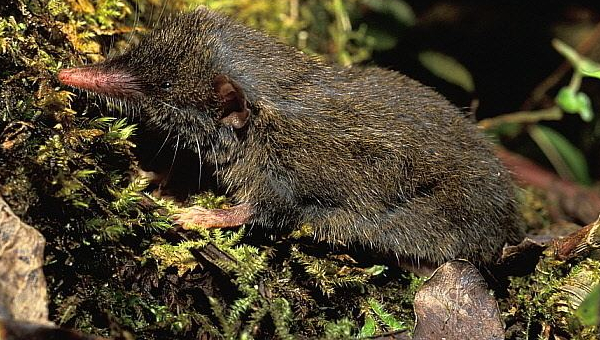
First described in the 1990s by Jenkins, the Shrew‑toothed Shrew Tenrec is distinguished among its relatives by unusually pointed, shrew‑like teeth that give its name and set it apart within the group.
- NE
- DD
- LCCurrent status: Least Concern
- NT
- VU
- EN
- CR
- RE
- EW
- EX
Current status: Least Concern
What does this mean?
The assessment found a lower risk of extinction.
Categories follow the IUCN Red List.- Kingdom
- Animalia
- Phylum
- Chordata
- Class
- Mammalia
- Order
- Afrosoricida
- Suborder
- Tenrecomorpha
- Family
- Tenrecidae
- Subfamily
- Oryzorictinae
- Genus
- Microgale
- Species
- Microgale soricoides
- Species group
- Tenrec
Get to know this species
Biology & ecology
Habitat
It is typically found in primary rainforest habitats, including elevational zones around 1,100 m (e.g. Mantady National Park), although its full distribution remains incompletely documented. Like many forest-dwelling tenrecs, it relies heavily on intact habitat and is vulnerable to deforestation and forest fragmentation.
Physical traits
The Shrew‑toothed Shrew Tenrec is a small, slender insectivore with a body built for moving through leaf litter. Although specific size metrics are seldom published, it is comparable to other shrew tenrecs in size, but its most notable feature is the sharply pointed teeth that resemble those of true shrews. This dental morphology is rare in the genus and likely reflects specialized feeding habits and prey capture strategies.
Behavior
Very little is known of its natural behaviour. It is presumed to be terrestrial and secretive, moving quietly through the forest floor. Like most of its relatives, it likely forages alone at night, using its sharp teeth to capture invertebrate prey in leaf litter or shallow soil. No formal studies have recorded its nesting, home‑range size, or thermoregulatory behaviour.
Diet
Diet-specific studies are lacking, but its toothed dentition and ground-dwelling habits suggest it feeds on insects, worms, and other small leaf‑litter invertebrates, as is typical for shrew tenrecs. Gut-content analyses in related species support this general feeding pattern, though no direct evidence exists for this species.
Reproduction
Almost nothing is known about its reproductive biology. A few pregnant females were found with two to three embryos in October–November, suggesting a breeding season in late wet-season months. Beyond this, details such as gestation length, litter size, timing and offspring development remain undocumented.
Communication
No direct observations exist on how this species communicates. As with its relatives, scent marking and tactile signals are likely important during brief social interactions or mother–offspring care. Vocalisations or ultrasonic communication have not been documented.
Threats
The species has a presumed wide occurrence in forested areas. However, its population trend is believed to be declining due to ongoing habitat loss from deforestation and fragmentation. Continued research is needed to clarify its conservation status and resilience to habitat change.
This species as pets
There are no records of the Shrew‑toothed Shrew Tenrec being kept or bred in captivity. No zoo collections or private holdings include this species, and no care or husbandry protocols exist, so its adaptability under captive conditions is entirely unknown.
Where does it live?
This tenrec is endemic to Madagascar, occurring in subtropical and tropical moist lowland and montane forests.
Linked Knowledge Hub articles
No linked public Knowledge Hub articles yet.
Linked research
No linked public research records yet.
Sources
Referenced sources
- Stephenson, P.J., Soarimalala, V. & Goodman, S. 2016. Microgale soricoides. The IUCN Red List of Threatened Species 2016: e.T62018A97201954. https://dx.doi.org/10.2305/IUCN.UK.2016-1.RLTS.T62018A97201954.en. Accessed on 16 October 2026. Open source