
Nimba otter shrew
Micropotamogale lamottei
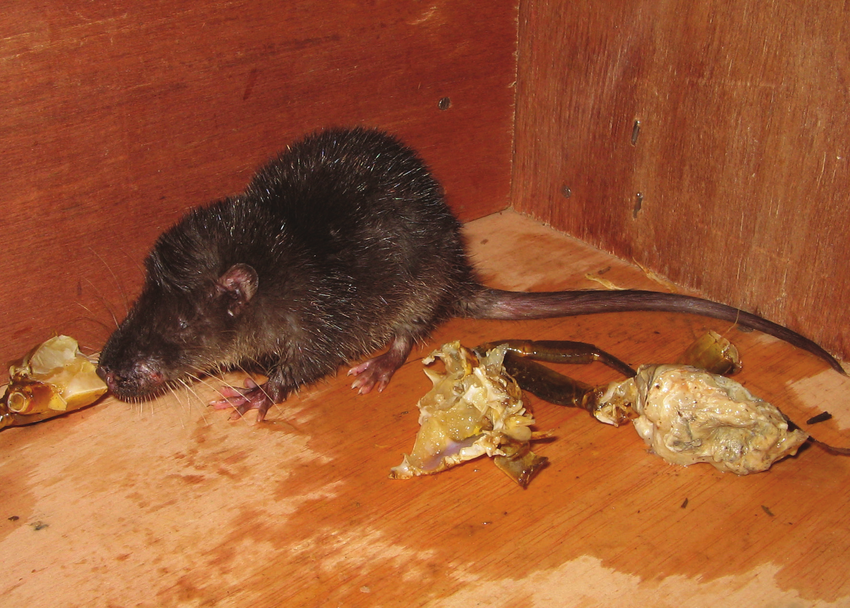
First described in 1955 by Heim de Balsac, the Nimba Otter Shrew is one of the smallest members of Tenrecomorpha and is only found in a tiny mountainous region between Guinea, Côte d’Ivoire, and Liberia.
- NE
- DD
- LC
- NT
- VUCurrent status: Vulnerable
- EN
- CR
- RE
- EW
- EX
Current status: Vulnerable
What does this mean?
This species faces a high risk of extinction in the wild.
Categories follow the IUCN Red List.- Kingdom
- Animalia
- Phylum
- Chordata
- Class
- Mammalia
- Order
- Afrosoricida
- Suborder
- Tenrecomorpha
- Family
- Potamogalidae
- Genus
- Micropotamogale
- Species
- Micropotamogale lamottei
- Species group
- Otter shrew
Get to know this species
Biology & ecology
Habitat
It inhabits fast-flowing mountain streams and densely vegetated riparian zones at altitudes between 400 and 1,400 meters. The surrounding forest is humid and biologically diverse, but the species is highly localized, its entire known range is only a few hundred square kilometers.
Physical traits
This small otter shrew reaches about 12–14 cm in body length with a slightly shorter tail, and weighs roughly 50–80 grams. Like its larger relative, it has sleek, water-repellent fur and a streamlined body built for swimming. Its tail is flattened side-to-side and used for propulsion through water, while strong limbs and webbed feet help in maneuvering through rocky, turbulent currents. The eyes are small, and the ears are barely visible, aiding in an aquatic lifestyle. Its most prominent features are the long, tactile whiskers that help detect prey in dark waters.
Behavior
The Nimba Otter Shrew is highly elusive and thought to be mostly nocturnal. It hunts along the banks and shallow parts of streams, using stealth and agility to locate and capture prey. During the day, it shelters in burrows, tree roots, or dense vegetation close to water. It is believed to be solitary and territorial. Unlike some other aquatic mammals, it does not dive deeply or spend long periods submerged, preferring to move close to the water’s edge. Its dependence on clean, oxygen-rich water makes it especially vulnerable to environmental change.
Diet
The Nimba Otter Shrew feeds mainly on aquatic invertebrates, including insect larvae, crustaceans, and small mollusks. It hunts by sweeping its sensitive whiskers through the water to detect movement. Prey is grasped quickly and either eaten in the water or taken to land. It is thought to rely heavily on certain aquatic insect species, which may limit its dietary flexibility.
Reproduction
Very little is documented about its reproductive cycle. Breeding is presumed to coincide with the wet season, when food is most abundant. Litters are believed to be small, with young born in well-concealed nests near water. Juveniles remain dependent on the mother for some time, though no detailed developmental data is available. Due to its highly restricted range, reproductive success may be sensitive to changes in stream flow and forest cover.
Communication
Little is known about this species’ communication. Like other otter shrews, it is expected to use a combination of chemical cues, tactile signals, and perhaps low-frequency sounds. Its dense whiskers are vital sensory tools for detecting vibrations from prey, and scent marking likely plays a role in territory boundaries. Visual communication is unlikely due to its small eyes and nocturnal, underwater habits.
Threats
The IUCN lists the Nimba Otter Shrew as Vulnerable due to its extremely small and fragmented range. Habitat destruction, mining (especially for iron ore in the Nimba region), logging, and water pollution are major threats. Because it depends on pristine highland streams, even minor ecological disturbances can have serious consequences. Conservation efforts focus on the Mount Nimba Strict Nature Reserve, a UNESCO World Heritage Site, but enforcement remains a challenge.
This species as pets
The Nimba Otter Shrew has never been successfully kept in captivity. Its specialized diet, small size, and need for constant access to clean, fast-flowing water make it unsuitable for zoos or private care. As a result, conservation strategies rely entirely on in situ protection of its natural habitat, rather than captive breeding or display.
Where does it live?
The Nimba Otter Shrew is endemic to the Nimba Mountains, a small and ecologically rich highland region straddling the borders of Guinea, Liberia, and Côte d’Ivoire.
Linked Knowledge Hub articles
No linked public Knowledge Hub articles yet.
Linked research
No linked public research records yet.
Sources
Referenced sources
- Stephenson, P.J., Monadjem, A., Decher, J. & Phalan, B. 2018. Micropotamogale lamottei. The IUCN Red List of Threatened Species 2018: e.T13393A111940150. https://dx.doi.org/10.2305/IUCN.UK.2018-2.RLTS.T13393A111940150.en. Accessed on 17 October 2026. Open source