
African pygmy hedgehog
Atelerix albiventris
First described in 1840 by Wagner. This is the only domesticated hedgehog species and is kept worldwide as a pet. Its most distinctive trait is the wide variety of colour morphs and patterns that do not occur in the wild.
- NE
- DD
- LCCurrent status: Least Concern
- NT
- VU
- EN
- CR
- RE
- EW
- EX
Current status: Least Concern
What does this mean?
The assessment found a lower risk of extinction.
Categories follow the IUCN Red List.- Kingdom
- Animalia
- Phylum
- Chordata
- Class
- Mammalia
- Order
- Eulipotyphla
- Family
- Erinaceidae
- Subfamily
- Erinaceinae
- Genus
- Atelerix
- Species
- Atelerix albiventris
- Species group
- Hedgehogs
Get to know this species
Biology & ecology
Habitat
It is a habitat generalist that favors savannahs, dry grasslands, scrublands, and edges of agricultural or settled areas, provided there is enough ground cover. It avoids dense tropical forests and extremely arid deserts. During the hottest parts of the day, it takes shelter under logs, rocks, or in shallow burrows, and may make use of termite mounds or abandoned rodent dens. Seasonal rainfall patterns strongly influence its activity and foraging behavior.
Physical traits
This species is small and compact, with adult weights ranging from 250 to 700 grams depending on sex, age, and season. Body length generally falls between 15 to 22 centimeters. It has a short, pointe…
Read full text
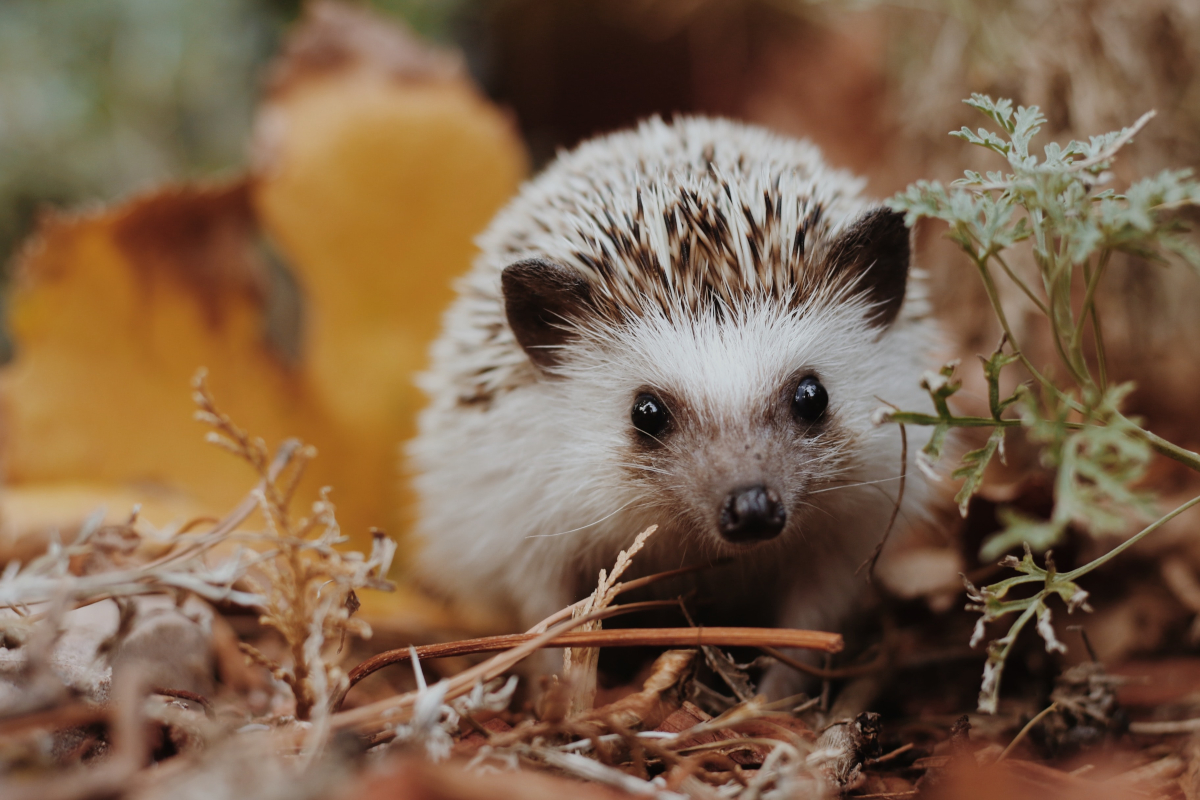
This species is small and compact, with adult weights ranging from 250 to 700 grams depending on sex, age, and season. Body length generally falls between 15 to 22 centimeters. It has a short, pointed snout, small round ears, and feet with curved claws. The hind feet have four toes instead of five, which is why they’re also sometimes called ‘Four-toed hedgehogs’. The back is covered in sharp, keratin-based spines, which are usually banded in shades of brown, cream, or gray. The ventral fur is soft and white to pale brown, hence the name “albiventris” meaning “white-bellied.” The tail is short and often hidden beneath the fur. Its eyes are large and dark, adapted for nocturnal vision, although its eyesight is relatively poor compared to its excellent sense of smell and hearing.
Behavior
The African pygmy hedgehog is solitary and primarily nocturnal, spending its active hours foraging for insects and small prey. It is territorial and does not tolerate conspecifics outside of the bree…
Read full text
The African pygmy hedgehog is solitary and primarily nocturnal, spending its active hours foraging for insects and small prey. It is territorial and does not tolerate conspecifics outside of the breeding season. Individuals maintain home ranges that they scent mark using feces and urine. When threatened, the hedgehog will curl into a tight ball, protecting its vulnerable head and belly with its quills. This behavior is controlled by a well-developed layer of muscle called the panniculus carnosus. It is a ground-dwelling species but can climb low obstacles and swim when necessary. During extreme environmental conditions, it may enter a state of torpor or aestivation, especially during prolonged heat or drought.
Diet
In its natural habitat, the African pygmy hedgehog is an opportunistic insectivore. Its diet includes beetles, caterpillars, termites, ants, earthworms, and other invertebrates, along with the occasional small vertebrate like amphibians, lizards, or bird eggs. It may also consume fallen fruit, carrion, or fungi when available, especially in times of food scarcity. Seasonal availability of prey influences its foraging strategy, and individuals may travel significant distances at night to locate sufficient food. Its long, sticky tongue and sensitive snout make it particularly effective at locating underground prey.
Reproduction
Reproduction in African pygmy hedgehogs is tied to environmental cues, particularly rainfall. In the wild, breeding occurs mainly during the rainy season when food is abundant. Males seek out recepti…
Read full text
Reproduction in African pygmy hedgehogs is tied to environmental cues, particularly rainfall. In the wild, breeding occurs mainly during the rainy season when food is abundant. Males seek out receptive females, often competing with rivals through scent and courtship behavior. After mating, the male departs, and the female raises the offspring alone. Gestation lasts about 30 to 40 days, after which a litter of 2 to 6 young is born in a sheltered nest. The young are born blind and spineless, but soft spines emerge within 24 hours. Eyes open after two weeks, and weaning occurs around four to six weeks of age. In the wild, sexual maturity is reached at around five to six months, and lifespan is typically 3 to 5 years, although some individuals may live longer.
Communication
Communication in African pygmy hedgehogs is primarily chemical and tactile. It uses scent marking extensively, particularly for territory boundaries and during mating. Vocalizations are rare but can include huffing, clicking, or snorting sounds in specific contexts, such as courtship or distress. Like other hedgehogs, it also exhibits a behavior known as self-anointing or anting, where it creates frothy saliva and spreads it over its spines. The function of this behavior remains uncertain, though it may play a role in scent camouflage or chemical defense.
Threats
Local populations face threats from habitat degradation, pesticide use, bushfires, and road mortality. The pet trade has created demand for “wild-caught” individuals in some regions, though most captive animals now come from established breeding lines. Climate change may alter the seasonal patterns essential for foraging and reproduction, but current data on population trends remain limited. More field research is needed to assess regional impacts and long-term viability in certain areas.
This species as pets
The African pygmy hedgehog is the most commonly kept hedgehog species in captivity and forms the basis of the exotic pet hedgehog industry worldwide. Most captive individuals are descended from Atele…
Read full text
The African pygmy hedgehog is the most commonly kept hedgehog species in captivity and forms the basis of the exotic pet hedgehog industry worldwide. Most captive individuals are descended from Atelerix albiventris, often selectively bred for specific colorations or temperaments. In captivity, they require carefully controlled environments that mimic their natural temperature range (22–28°C) and provide opportunities for nocturnal activity and burrowing. Obesity, dental disease, and skin issues such as mites are common without proper care. Their solitary nature makes them unsuitable for group housing, and many behavioral problems stem from inappropriate handling or environmental stress. Though captive breeding has reduced pressure on wild populations, it has also led to a narrowing of genetic diversity and the emergence of inbreeding-related conditions such as Wobbly Hedgehog Syndrome. Enrichment, varied diet, and regular veterinary care are essential for their wellbeing.
Where does it live?
African pygmy hedgehogs are native to central and eastern Africa, with a range that includes countries such as Nigeria, Ghana, Togo, Benin, Sudan, Ethiopia, Uganda, Kenya, and parts of the Democratic Republic of Congo.
In the Registry
Anonymous totals from public registered records.
- Registered animals
- 4
- Male
- 2
- Female
- 2
- Unknown sex
- 0
- Litters · all time
- 0
- Litters · last 12 months
- 0
- Active public programmes
- 1
Genetics
Genes, alleles and colour inheritance
This genetics block shows the public educational layer only. Private pedigree data and owner details are not shown.
| Trait | Gene | Alleles | Inheritance | Notes |
|---|---|---|---|---|
| Agouti / Black series Colour | A | A, a | Black behaves as incomplete recessive in the prepared THP model. | Prepared from THP Registry calculator rules and long-term pedigree interpretation. Public summary only; raw pedigree data is restricted. |
| Brown dilution series Colour | B | B, b | Recessive dilution model used for colour outcome calculations. | Prepared for calculator-backed colour outcomes in THP Registry. |
| Albino / C series Colour | C | C, c | Recessive albino override in the prepared THP model. | Albino can override visible colour expression in the public model. |
| Grey dilution series Colour | D | D, d | Recessive dilution model used for grey outcomes. | Prepared for grey and combined dilution outcomes. |
| Pink-eyed dilution series Colour | P | P, p | Recessive model used for pink-eyed outcomes and combined colours. | Prepared for pink-eyed black, blonde and related calculated outcomes. |
Colours, patterns and calculated outcomes 34
Colour
Dark Grey
Genetic code: AA B* C* D* P*
Inheritance: Base colour
Base colour outcome from the THP Registry APH calculator.
Colour
Mocca Dark Grey
Genetic code: Aa B* C* D* P*
Inheritance: Incomplete recessive
Mocca modifier on dark grey.
Colour
Black
Genetic code: aa B* C* D* P*
Inheritance: Incomplete recessive
Black-series colour outcome.
Colour
Brown
Genetic code: AA bb C* D* P*
Inheritance: Autosomal recessive
Brown factor outcome.
Colour
Mocca Brown
Genetic code: Aa bb C* D* P*
Inheritance: Combined inheritance
Combined Mocca and Brown outcome.
Colour
Chocolate
Genetic code: aa bb C* D* P*
Inheritance: Combined inheritance
Combined black-series and brown outcome.
Colour
Grey
Genetic code: AA B* C* dd P*
Inheritance: Autosomal recessive
Grey dilution outcome.
Colour
Mocca Grey
Genetic code: Aa B* C* dd P*
Inheritance: Combined inheritance
Combined Mocca and Grey outcome.
Colour
Slate Blue
Genetic code: aa B* C* dd P*
Inheritance: Combined inheritance
Black-series with grey dilution.
Colour
Cinnicot
Genetic code: AA B* C* D* pp
Inheritance: Autosomal recessive
Pink-eyed/cinnicot factor outcome.
Colour
Mocca Cinnicot
Genetic code: Aa B* C* D* pp
Inheritance: Combined inheritance
Combined Mocca and Cinnicot outcome.
Colour
Pink Eyed Black
Genetic code: aa B* C* D* pp
Inheritance: Combined inheritance
Black-series with pink-eyed factor.
Colour
Cinnamon
Genetic code: AA bb C* dd P*
Inheritance: Combined inheritance
Brown and grey dilution combination.
Colour
Mocca Cinnamon
Genetic code: Aa bb C* dd P*
Inheritance: Combined inheritance
Mocca modifier with cinnamon outcome.
Colour
Lilac
Genetic code: aa bb C* dd P*
Inheritance: Combined inheritance
Black-series, brown and grey combination.
Colour
Apricot
Genetic code: AA bb C* D* pp
Inheritance: Combined inheritance
Brown with pink-eyed factor.
Colour
Mocca Apricot
Genetic code: Aa bb C* D* pp
Inheritance: Combined inheritance
Mocca modifier with apricot outcome.
Colour
Fawn
Genetic code: aa bb C* D* pp
Inheritance: Combined inheritance
Black-series, brown and pink-eyed combination.
Colour
Pale Apricot
Genetic code: AA B* C* dd pp
Inheritance: Combined inheritance
Grey dilution with pink-eyed factor.
Colour
Mocca Pale Apricot
Genetic code: Aa B* C* dd pp
Inheritance: Combined inheritance
Mocca modifier with pale apricot outcome.
Colour
Copper
Genetic code: aa B* C* dd pp
Inheritance: Combined inheritance
Black-series, grey dilution and pink-eyed factor.
Colour
Blonde
Genetic code: AA bb C* dd pp
Inheritance: Combined inheritance
Brown, grey dilution and pink-eyed factor.
Colour
Mocca Blonde
Genetic code: Aa bb C* dd pp
Inheritance: Combined inheritance
Mocca modifier with blonde outcome.
Colour
Champagne
Genetic code: aa bb C* dd pp
Inheritance: Combined inheritance
Black-series, brown, grey dilution and pink-eyed factor.
Colour
Albino
Genetic code: ** ** cc ** **
Inheritance: Autosomal recessive
cc is a visual override; retain underlying A/B/D/P colour.
Pattern
Pinto
Genetic code: Pi*
Inheritance: Autosomal dominant
Pinto locus expression.
Pattern
Reversed Pinto
Genetic code: Pipi + Reversed modifier ON
Inheritance: Modifier
Requires Pinto expression plus reversed modifier.
Pattern
Full Reversed Pinto
Genetic code: PiPi + Reversed modifier ON
Inheritance: Modifier
Full reversed visual override within the Pinto modifier model.
Pattern
Masked Pinto
Genetic code: Pi* + Masked modifier ON
Inheritance: Modifier
Pinto expression with masked modifier.
Pattern
Snowflake
Genetic code: S*
Inheritance: Autosomal dominant
Snowflake pattern locus.
Pattern
White
Genetic code: Ww
Inheritance: Genotype specific
White genotype-specific outcome.
Pattern
Double White
Genetic code: ww
Inheritance: Genotype specific
Double White warning outcome.
Double White is associated with severe health problems and this warning must always remain visible.
Pattern
Umbrous
Genetic code: U*
Inheritance: Autosomal dominant
Umbrous modifier.
Pattern
Ticking
Genetic code: T*
Inheritance: Autosomal dominant
Ticking modifier.
Linked Knowledge Hub articles
How to spot and prevent hibernation attempts
Read articleLinked research
Genetics
Colour inheritance in African pygmy hedgehogs
Archived nine-year genetics research project based on pedigrees, colour outcomes and calculator modelling.
View researchSources
Referenced sources
- Cassola, F. 2016. Atelerix albiventris (errata version published in 2017). The IUCN Red List of Threatened Species 2016: e.T40602A115174097. https://dx.doi.org/10.2305/IUCN.UK.2016-3.RLTS.T40602A22324217.en. Accessed on 15 October 2026. Open source