
Mindanao gymnure
Podogymnura truei
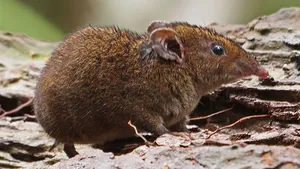
First described in 1905, the Mindanao Gymnure is a medium-sized forest mammal endemic to Mindanao, distinguished by its dense soft fur, long whiskers, and pungent scent used for defense.
- NE
- DD
- LCCurrent status: Least Concern
- NT
- VU
- EN
- CR
- RE
- EW
- EX
Current status: Least Concern
What does this mean?
The assessment found a lower risk of extinction.
Categories follow the IUCN Red List.- Kingdom
- Animalia
- Phylum
- Chordata
- Class
- Mammalia
- Order
- Eulipotyphla
- Family
- Erinaceidae
- Subfamily
- Galericinae
- Genus
- Podogymnura
- Species
- Podogymnura truei
- Species group
- Gymnure
Get to know this species
Biology & ecology
Habitat
It inhabits moist montane and mossy forests, typically between 1,300 and 2,900 meters elevation, and is particularly abundant in the cloud forest zones around Mount Apo, Mount Kitanglad, and Mount Kalatungan. It shelters among tangled tree roots, moss-covered logs, streamside ferns, and dense undergrowth, often in proximity to standing water or damp ground.
Physical traits
A medium-sized gymnure, this animal measures approximately 13 to 15 cm in body length, with a well-furred tail around 4 to 7 cm long, about one-third of its body length. Weight ranges between 40 and 80 g. Its dorsal fur is long, soft, and grey interspersed with reddish-brown hairs; its belly is hoary with brown and white tones. It has a long, sensitive snout, large semi-naked ears, robust whiskers, and a strong tail. An anal gland releases a strong garlic- or onion-like odor when threatened.
Behavior
This gymnure is strictly terrestrial and nocturnal or crepuscular. It remains hidden during the day in burrows or dense forest cover, emerging at night to forage. It actively moves through undergrowth and fallen debris, creating narrow runways beneath moss and ferns. It is solitary and territorial, using scent and stealth rather than confrontation when threatened.
Diet
The Mindanao Gymnure primarily feeds on invertebrates, such as beetles, worms, and arthropods, with occasional scavenging of carrion, fungi, or fruit. Its keen snout and whiskers aid in detecting prey within the leaf litter.
Reproduction
Breeding can occur multiple times per year. Pregnant females have been recorded in March, April, and June, suggesting a polygynous system. Litter sizes are small (one to two young), with some females displaying enlarged mammary glands even when not pregnant.
Communication
While detailed studies are lacking, communication likely relies on olfactory cues, with scent marking using its pungent anal secretion and possibly tactile signals during brief interactions. Visual communication plays a minor role due to limited visibility in its dense habitat.
Threats
Classified as Least Concern by the IUCN, this species benefits from stable high-elevation habitats with low commercial logging. However, lowland forest loss from slash-and-burn agriculture and logging could affect its range if degradation moves upward.
This species as pets
There are no known records of the Mindanao Gymnure being held in captivity. Its secretive nature, specialized forest habitat, and scent-based defense make it a poor candidate for captivity. Conservation in the wild remains the only viable strategy.
Where does it live?
This species is endemic to the mountainous regions of Mindanao in the Philippines, specifically in the provinces of Bukidnon, Davao del Norte, and Davao del Sur.
Linked Knowledge Hub articles
No linked public Knowledge Hub articles yet.
Linked research
No linked public research records yet.
Sources
Referenced sources
- Heaney, L., Balete, D. & Tabao, M. 2016. Podogymnura truei. The IUCN Red List of Threatened Species 2016: e.T17828A22326078. https://dx.doi.org/10.2305/IUCN.UK.2016-2.RLTS.T17828A22326078.en. Accessed on 17 October 2026. Open source