
Dinagat gymnure
Podogymnura aureospinula
First described in 1982, the Dinagat Gymnure is a rare endemite of the Philippines, known for its golden‑spined fur and highly restricted island distribution.
- NE
- DD
- LC
- NT
- VU
- ENCurrent status: Endangered
- CR
- RE
- EW
- EX
Current status: Endangered
What does this mean?
This species faces a very high risk of extinction in the wild.
Categories follow the IUCN Red List.- Kingdom
- Animalia
- Phylum
- Chordata
- Class
- Mammalia
- Order
- Eulipotyphla
- Family
- Erinaceidae
- Subfamily
- Galericinae
- Genus
- Podogymnura
- Species
- Podogymnura aureospinula
- Species group
- Gymnure
Get to know this species
Biology & ecology
Habitat
It inhabits subtropical or tropical dry forests, both primary and secondary, and is even occasionally seen at the edges of significantly altered landscapes, if remnant forest patches persist. Its limited range below 5,000 km² places it among the most range-restricted mammals in the Philippines.
Physical traits
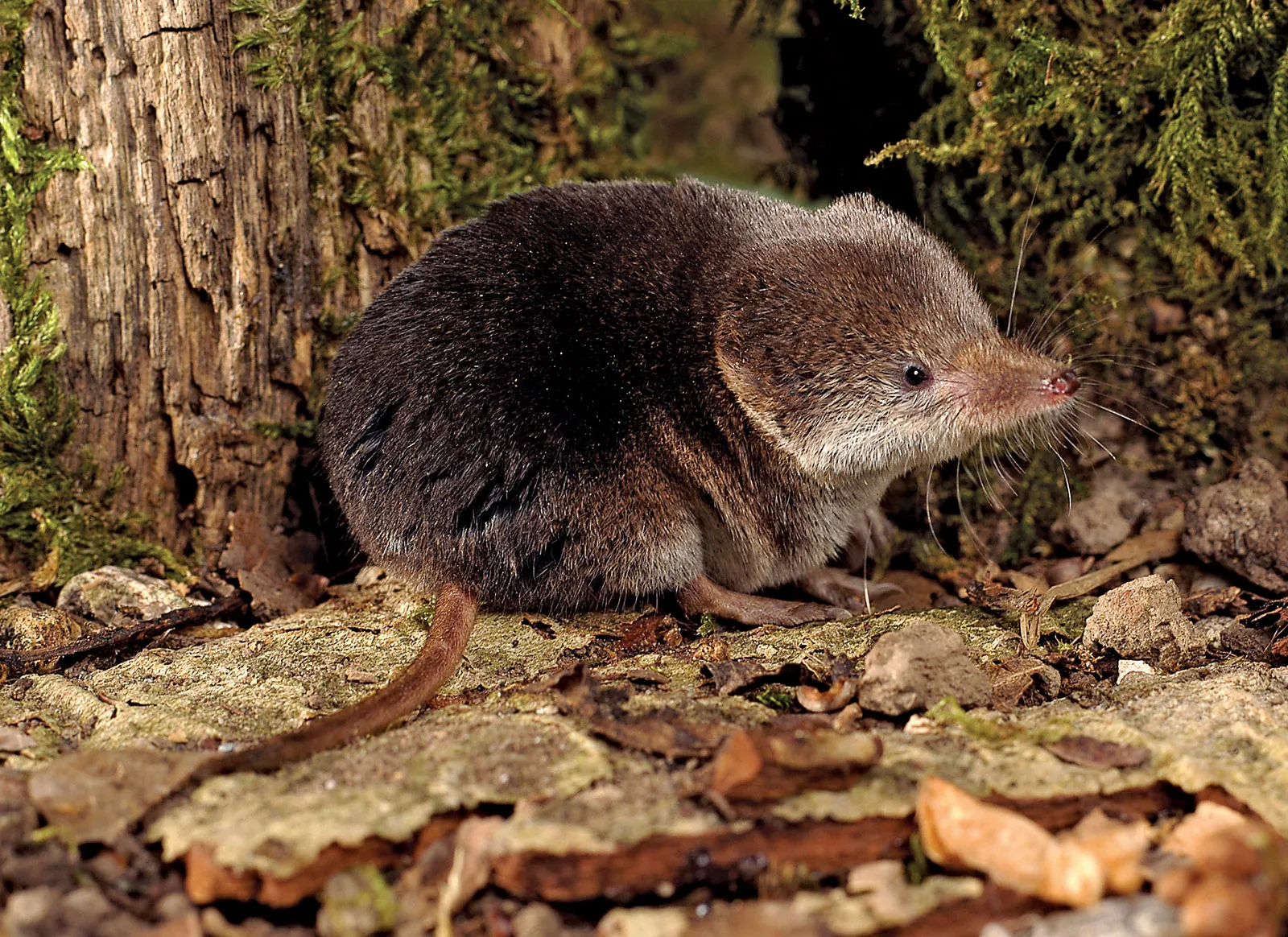
The Dinagat Gymnure is relatively large for its group, measuring around 19 to 21 cm from head to rump, with a short tail of approximately 6 to 7 cm making it second only to the moonrat in size. Its back bears coarse, gold-brown fur with dark speckles, while the belly is a softer gray-brown. Its large ears are adorned with short hairs, and the skull has an enlarged frontal region with distinctive dental features.
Behavior
Little is known about its behavior, but it appears to prefer ground-level movement through forest litter. Individuals have been trapped in primary and secondary forests, including areas that have undergone significant disturbance, suggesting some degree of tolerance to habitat change. However, this adaptability is not well understood.
Diet
No direct studies document its diet, but gymnures are generally opportunistic insectivores. The Dinagat Gymnure probably hunts insects, earthworms, and other invertebrates found within the forest floor substrate, using its snout to probe and capture prey.
Reproduction
Nothing is known about its reproductive biology. As with other gymnures, it’s presumed to have a small litter and possibly a seasonal breeding cycle, though such life history details remain undocumented.
Communication
Specific data on how this species communicates are absent. It is likely to use scent marking and tactile signals like its relatives, as well as potentially silent vocalizations for short-range interaction, particularly in dense forest environments.
Threats
The Dinagat Gymnure is listed as Endangered due to its extremely limited distribution and ongoing habitat loss, driven by deforestation and open-pit mining for chromite and nickel on Dinagat Island. While it may be relatively common within forest patches, its survival is severely threatened by habitat fragmentation and mining concessions.
This species as pets
There are no known records of the Dinagat Gymnure being held in captivity. Its rarity, specialized habitat, and relatively inaccessible range make it highly unsuited for captive care. Conservation efforts focus exclusively on protecting it in the wild, with projects underway to establish protected areas on Dinagat Island.
Where does it live?
This species is found only on Dinagat Island and nearby Bucas Grande in the southeastern Philippines.
Linked Knowledge Hub articles
No linked public Knowledge Hub articles yet.
Linked research
No linked public research records yet.
Sources
Referenced sources
- Balete D S, Heaney L R, Rickart E A, Quidlat R S, Rowsey D M, Olson L E, plazi (2023). A re-assessment of diversity among Philippine gymnures (Mammalia: Erinaceidae Podogymnura), with a new species from eastern Mindanao. Plazi.org taxonomic treatments database. Checklist dataset https://doi.org/10.15468/bnb6qm accessed via GBIF.org on 2026-10-17. Open source
- Clayton, E. 2018. Podogymnura aureospinula. The IUCN Red List of Threatened Species 2018: e.T17829A22326149. https://dx.doi.org/10.2305/IUCN.UK.2018-1.RLTS.T17829A22326149.en. Accessed on 17 October 2026. Open source