
Dalat gymnure
Hylomys macarong
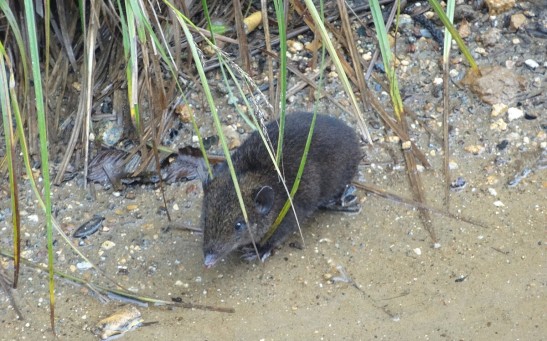
Described as a distinct species in December 2023, the Dalat Gymnure is named after the Da Lat Highlands of southern Vietnam and is notable for the striking long upper incisors of mature males, inspiring the Vietnamese name macarong, meaning “vampire.”
- NECurrent status: Not Evaluated
- DD
- LC
- NT
- VU
- EN
- CR
- RE
- EW
- EX
Current status: Not Evaluated
What does this mean?
This species has not been assessed yet.
Categories follow the IUCN Red List.Not Assessed
- Kingdom
- Animalia
- Phylum
- Chordata
- Class
- Mammalia
- Order
- Eulipotyphla
- Family
- Erinaceidae
- Subfamily
- Galericinae
- Genus
- Hylomys
- Species
- Hylomys macarong
- Species group
- Gymnure
Get to know this species
Biology & ecology
Habitat
It inhabits lowland deciduous forests and mid-elevation evergreen and savanna forest mosaics, often sheltering under grass, tree trunks, shrubs, or near water margins. Its distribution appears highly localized and fragmented.
Physical traits
Medium-sized among gymnures, it measures around 13.5 to 17 cm in total length, including a relatively long tail (~2–2.5 cm, about 17% of body length). Its fur is brown with dark guard hairs and a rust-colored belly in males. Notably, mature males have striking long upper incisors, longer than females, resulting in some sexual dimorphism of the canines.
Behavior
Little is known about its behavior. A juvenile female and an adult male were found in the same trap on consecutive days, suggesting possible parental care or overlapping home ranges. Juveniles have typically been recorded from September to mid‑October, while males show their reddish ventral color between July and September, perhaps linked to breeding seasonality.
Diet
Dietary habits remain undocumented. However, as an insectivorous mammal, it likely feeds on insects, larvae, earthworms, and other invertebrates. The long incisors of males may assist in capturing or processing certain prey, but further study is needed to clarify dietary specialization.
Reproduction
Evidence suggests an extended breeding season: males with rust-colored chests and enlarged testes appear from July to September, and young are found from mid‑September to October. One female with six nipples was noted in December, indicating active lactation.
Communication
No specific observations exist, but like other gymnures, chemical communication via scent marking, along with subtle body language and perhaps soft vocalization, are likely modes of interaction, especially for reproductive or territorial signals.
Threats
As a newly described species, the Dalat Gymnure is not yet assessed by the IUCN. Its habitat lies in a region of intense deforestation and land-use change, making it potentially vulnerable. It is known to occur in protected areas such as Bu Gia Map and Cat Tien National Parks, but its true population size and resilience remain unknown.
This species as pets
There are no known records of the Dalat Gymnure being held in captivity. Its limited distribution, elusive nature, and potential habitat specificity make it an unlikely candidate for ex situ conservation efforts.
Where does it live?
This species is endemic to the Da Lat and Dak Lak Plateaus in southern Vietnam, at elevations ranging from 30 to 1,750 meters above sea level.
Linked Knowledge Hub articles
No linked public Knowledge Hub articles yet.
Linked research
No linked public research records yet.
Sources
Referenced sources
- Arlo Hinckley, Miguel Camacho-Sanchez, Marcus A H Chua, Manuel Ruedi, Darrin Lunde, Jesús E Maldonado, Hasmahzaiti Omar, Jennifer A Leonard, Melissa T R Hawkins, An integrative taxonomic revision of lesser gymnures (Eulipotyphla: Hylomys) reveals five new species and emerging patterns of local endemism in Tropical East Asia, Zoological Journal of the Linnean Society, Volume 202, Issue 2, October 2024, zlad177, https://doi.org/10.1093/zoolinnean/zlad177 Open source